







Niushou Mountain Cultural Tourism Zone is not a single monument — it is a mountain wearing fifteen centuries of architecture. First-timers who arrive without a plan end up ricocheting between the parking lot, the shuttle stops and the souvenir map, and still miss half the story. This guide walks the twelve sights that actually matter, in the order you will meet them, with the history that makes each one worth standing still for.
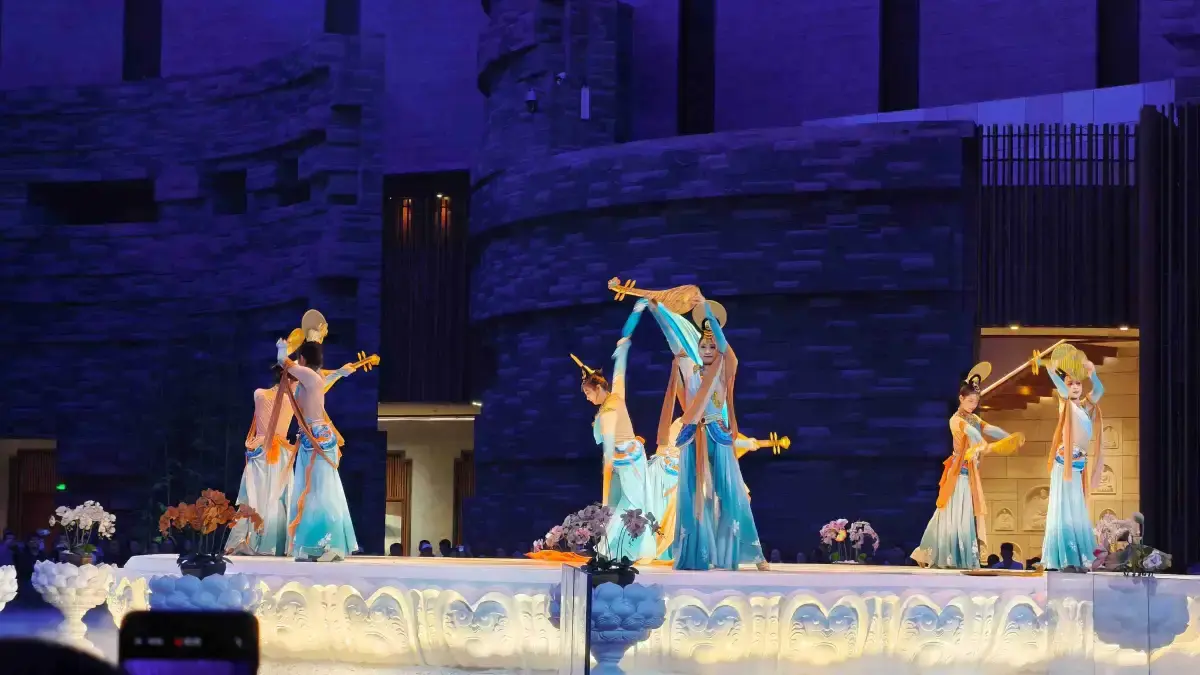
Key takeaways
- One mountain, three eras: a 6th-century cave temple, a Tang-dynasty Zen school, and a 21st-century palace built for the relic of the Buddha.
- The palace alone justifies the trip — reviewers compare its interior to Gaudí’s Sagrada Família.
- The mountain is big: buy the all-day shuttle (~20 RMB) and treat this list as a hop-on, hop-off route.
- Don’t skip the “minor” sights — the tomb of Zheng He and Yue Fei’s fortress are quiet, history-heavy counterweights to the palace’s spectacle.
- From $21.75 with one admission covering all twelve stops.
Before you climb: grab tickets on Trip.com (from $21.75, instant e-ticket), pick up an English map at the entrance, and check the day’s notices — individual structures occasionally close for maintenance.
The twelve highlights
1. The Usnisa Palace facade. Your first sight is also the most surreal: a monumental stone facade carved into the amphitheater of a former mine pit. Reviewers reach for ancient civilizations to describe it — “the architecture looks like Greece or Egypt” is a real first impression — and it sets the tone for everything inside.
2. The Blue Hall. Pass the threshold and the light changes. The palace’s entrance chamber glows in deep ceremonial blue, tiered like the inside of a jeweled bell. It is the moment most visitors stop talking; one reviewer wrote simply, “Absolutely speechless. I had never seen a place like this before.”
3. The large dome and small dome. The palace is organized around two domes representing external and internal worship — architecture as a Buddhist teaching. Walk both, in order, and the building explains its own theology before you read a single panel.
4. The underground palace. Six floors below ground and three above, built into the original mine pit, the underground palace descends through chamber after chamber of reliquary art. It is the structural heart of the “Buddha’s Peak Palace” concept — themed entirely on the worship of the skull relic of Sakyamuni, enshrined here on the mountain.
5. The Relic Hall. The holiest room on the mountain. Even empty of ceremony it is breathtaking; on special Buddhist festivals the relic itself is brought out for public worship — a scene pilgrims cross continents to witness (confirm dates on +86-4001656363).
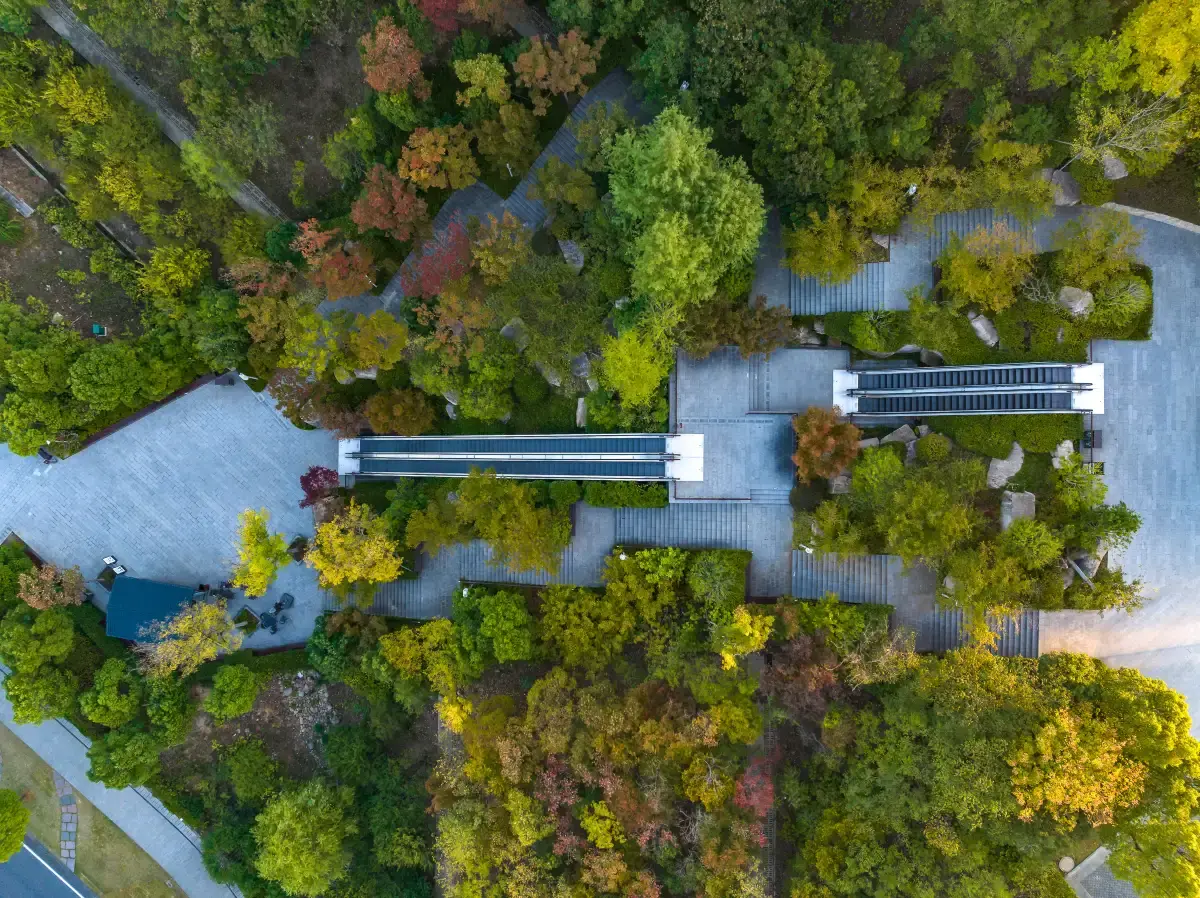
6. The Usnisa Pagoda. Out on the hill again, the ancient brick pagoda rises above the twin peaks that give the mountain its name. Tang Emperor Daizong “once dreamed of the Pratyekabuddha from Niushou Mountain coming to see him” — and the pagoda commemorates the dream. Note: it has periodically closed for maintenance, so check the day’s access.
7. Hongjue Temple. The mountain’s historic temple, first founded as a cave temple in 503 by Sikong Xu Du in the second year of the Liang Dynasty’s Tianjian era, and renamed Hongjue by Li Yu, the last emperor of the Southern Tang. A working thread of 1,500 years, not a museum piece.
8. The Niutou Zen heritage. Here — right here — Tang-dynasty Master Fa Rong, the “Dharma of Dongxia”, founded the Niutou Zen Sect, “Niutou of Jiangbiao”. The school’s role in bridging Indian Zen into Chinese Zen makes this slope quietly significant in the history of East Asian Buddhism; the atmosphere among the pines does the rest.
9. Peach Blossom Creek. Down at the eastern entrance, 14.87 hectares (about 220 mu) of stream-and-blossom landscape: a creek meandering down from Yinlong Lake between banks of 26 varieties of peach blossom. In March and April this is the “Spring Niushou” of the ancient saying, and every photographer in Nanjing knows it.
10. Yinlong Lake. The creek’s source and the route’s quiet pool. Most tour groups hurry past; the mirror-calm water with pagoda silhouettes is one of the mountain’s best-kept camera angles.
11. Zheng He Cultural Park. The great Ming navigator — the man who commanded seven voyages decades before Columbus — rests on this mountain. His tomb and memorial park are shaded, solemn, and a favorite with families: kids who know the story walk out telling it.
12. Yue Fei’s Anti-Jin Fortress. The ramparts where the Song general Yue Fei fortified the pass against Jin cavalry close the day with a different flavor of history — military, wind-scoured, with the southern plain spread below. It is the reminder that this “holy mountain” was also a strategic one.
How they connect — a working route
The twelve stops split naturally into three clusters, and the shuttle system stitches them together. Palace cluster (1–5): ride up from the west entrance and give the whole complex two hours; the interior rewards slowness. Historic cluster (6–8): shuttle or walk to the pagoda hill for the temple, the pagoda and the Zen heritage in one loop. Landscape cluster (9–12): descend toward the eastern entrance for the creek and lake, detour to Zheng He’s park, and finish at the fortress for the view — or flip the order in spring, when the blossoms deserve your freshest morning legs.
One day covers all twelve at a relaxed pace only if you respect the mountain’s size: reviewers are unanimous that walking everything is not possible, that the multi-trip shuttle pass is essential, and that comfortable shoes are not optional. Plan backward from the 16:30 admission cutoff, keep the palace for the quiet morning hours, and let the day end low by the water.
From real trips: a visitor who brought her mother saw the palace, the pagoda and Zheng He’s tomb, and reported the whole family “totally amazed” — “we spent the entire day here.” That is the correct scale of ambition for this list: twelve stops, one unhurried day, zero regret.
Frequently asked questions
Which highlights should I prioritize with only half a day?
The palace cluster (1–5) plus the Usnisa Pagoda (6). If blossoms are in season, trade the fortress for Peach Blossom Creek. This half-mountain, done slowly, beats the full list done at a jog.
Are all twelve included in the standard admission?
Yes — one admission covers the zone and its headline sights. The shuttle bus (~20 RMB all-day two-way) is a separate on-site purchase, and individual structures may occasionally close for maintenance.
Is the route stroller- or wheelchair-friendly?
Largely, yes — reviewers specifically praise ramps and buses that make the park “accessible for all”. The shuttle does the climbing; the palace has step-free circulation; the pagoda hill involves the most gradient.
Where does the full route exist in one place?
The 방문객 가이드 turns these twelve stops into hour-by-hour itineraries — half-day and full-day plans with the shuttle logic already solved.
Twelve stops, one ticket, from $21.75
Book online in five minutes — instant confirmation, e-ticket entry, no printing.
Sources & official references
- Trip.com — Niushou Mountain Cultural Tourism Zone attraction listing (checked October 2026) and official sight descriptions.
- Official history notes: cave temple of 503 (Liang Dynasty), Hongjue Temple renaming, Pratyekabuddha Pagoda, Niutou Zen Sect of Master Fa Rong.
- Official description of the Usnisa Palace: skull-relic worship theme, large and small domes, underground palace six floors below and three above ground.
- Verified traveler reviews on Trip.com (35,221 reviews, 4.7/5 average) for route pacing, accessibility and shuttle logistics.
