Buddhist Heritage
The Usnisa Palace, Hongjue Temple and the Niutou Zen lineage keep the mountain's spiritual heart beating — from the relic of Sakyamuni to morning bells above the plain.
牛首山文化旅游区
The story of Niushou Mountain Cultural Tourism Zone — a sacred Buddhist mountain, a relic palace of national significance, and Nanjing's classic "Spring Niushou" landscape.
Who we are
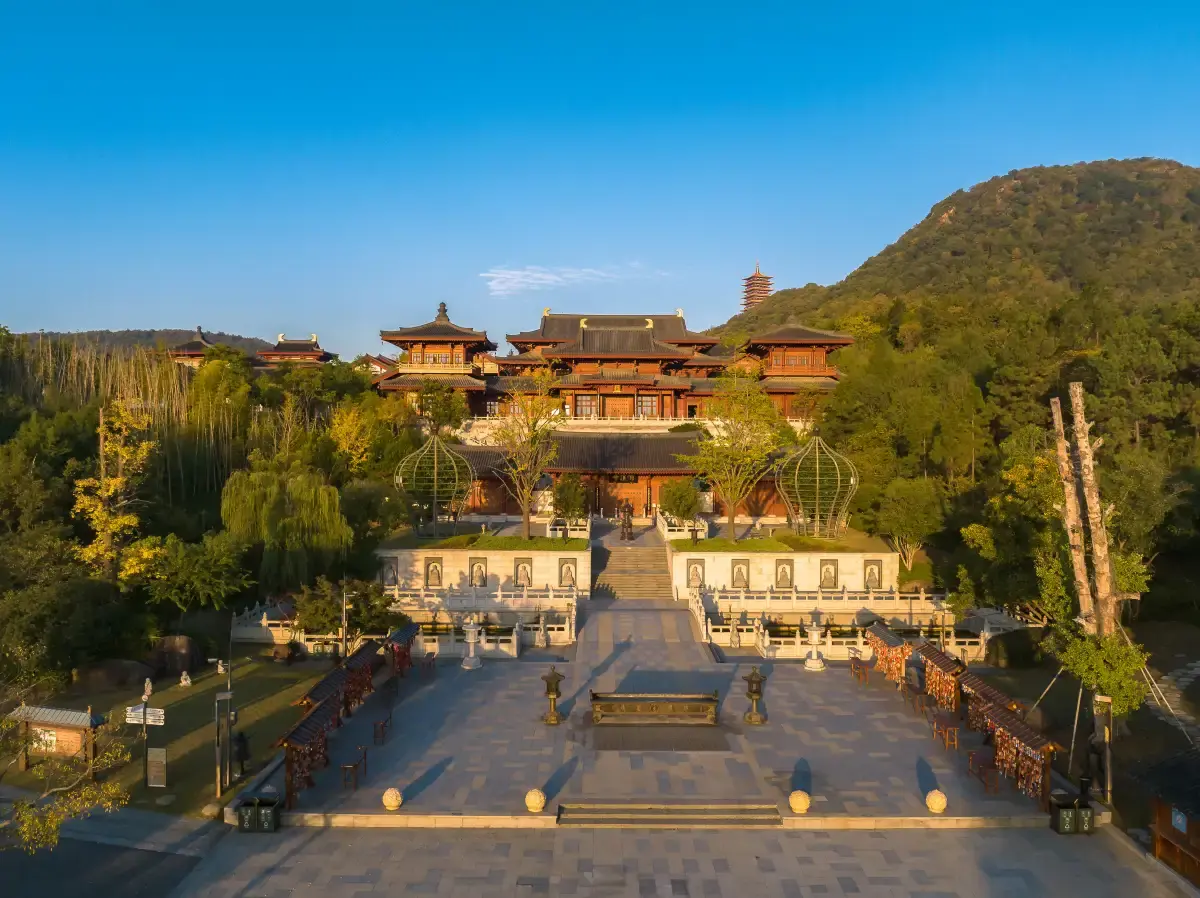
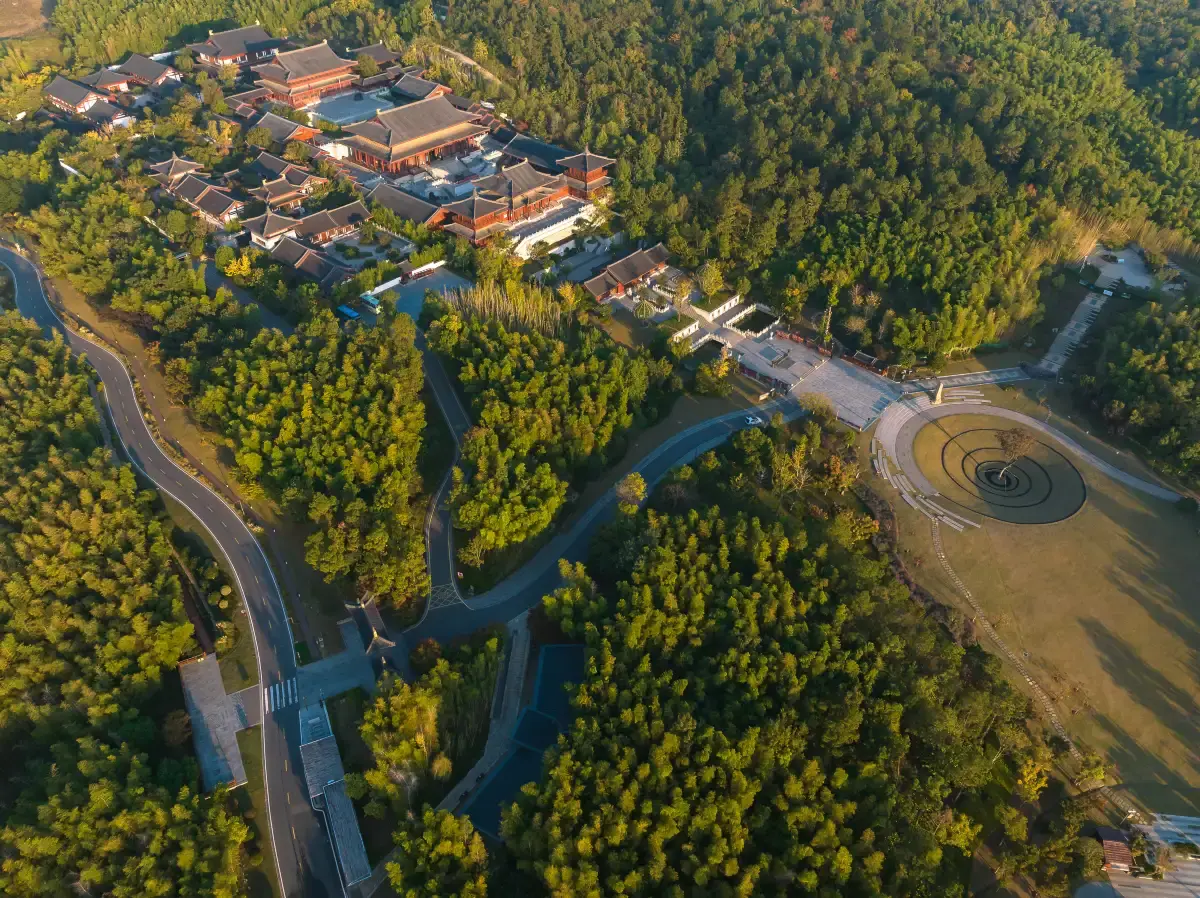
Niushou Mountain Cultural Tourism Zone (牛首山文化旅游区) spreads across the twin-peaked mountain of Niushou Shan — "Ox-Head Mountain" — at No. 18 Ningdan Avenue in Jiangning District, on Nanjing's southern edge. The mountain takes its name from the pair of natural peaks on its crest that resemble the double horns of an ox's head, and it has drawn monks, emperors, poets and pilgrims for more than fifteen centuries.
Ancient Jinling — today's Nanjing — ranked its scenery with pride: the "Spring Niushou" saying, the misty peaks of Niu Shou Yanlan and the sound of Zutang Zhenxi were among the most celebrated views of the old capital. The mountain's Buddhist story began in 503, when the official Sikong Xu Du built the first cave temple here in the second year of the Liang Dynasty's Tianjian era, and it matured in the Tang Dynasty when Master Fa Rong founded the Niutou Zen Sect — a school so influential it helped bridge the transformation of Indian Zen into Chinese Zen.
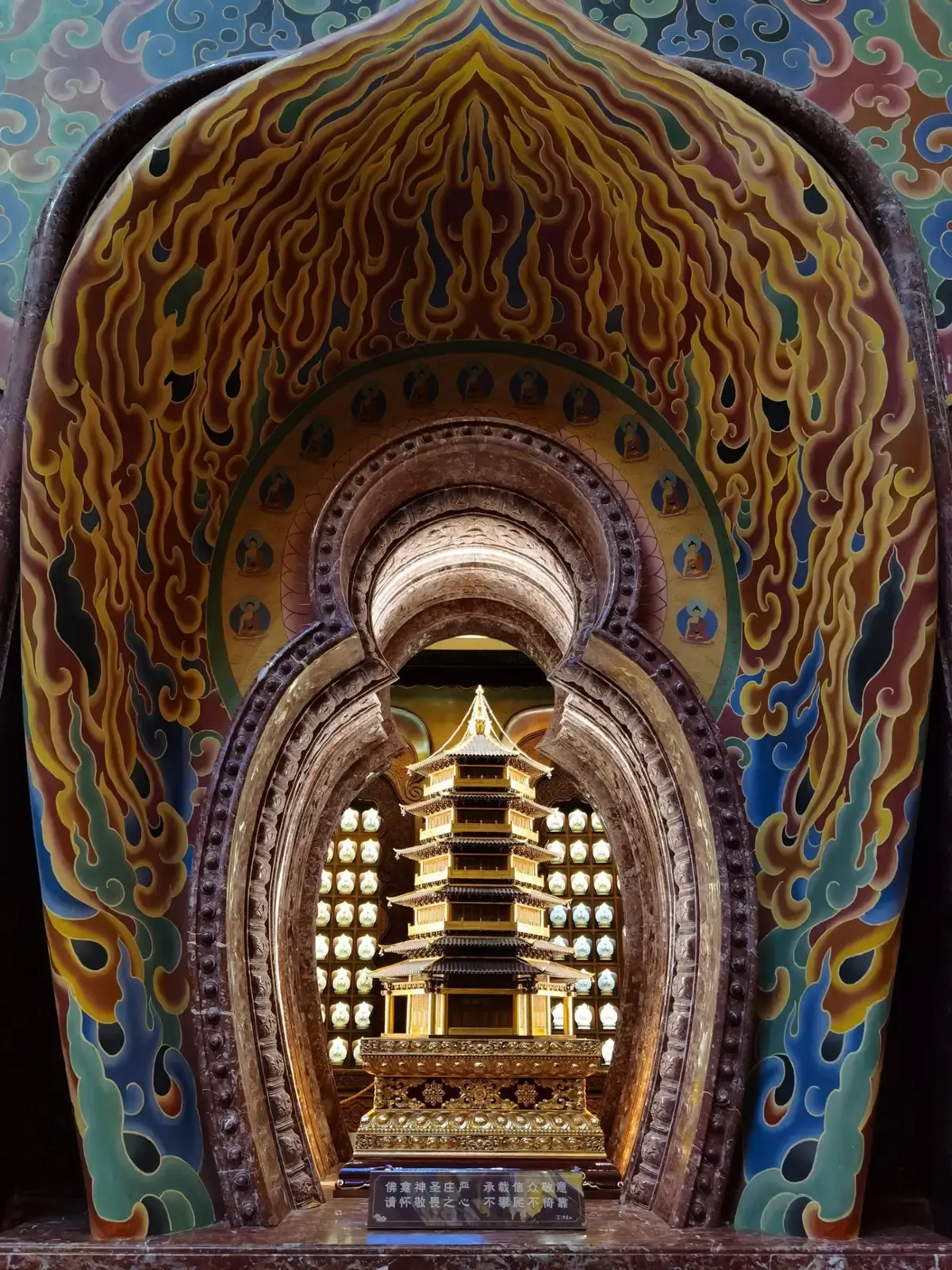
Today the zone gathers that entire inheritance into one destination: the Usnisa Palace built to enshrine the skull relic of Sakyamuni, the thousand-year-old Hongjue Temple and its pagoda, the creek of twenty-six varieties of peach blossoms, the tomb of navigator Zheng He, and the fortress of general Yue Fei — a landscape where culture, religion, history and nature share a single mountain.
What the zone stands for
Niushou Mountain is more than a scenic hill — it is a cultural tourism zone built around four ideas.
The Usnisa Palace, Hongjue Temple and the Niutou Zen lineage keep the mountain's spiritual heart beating — from the relic of Sakyamuni to morning bells above the plain.
The fortress of Yue Fei, the tomb of Zheng He and a thousand years of imperial attention make the mountain a walkable archive of Chinese history.
Peach Blossom Creek, Yinlong Lake and the misty twin peaks renew the ancient "Spring Niushou" reputation with every March bloom.
Shuttle buses, ramps, luggage storage, English maps and tour guides — infrastructure designed for the millions the mountain welcomes every year.
Location
The zone sits in Jiangning District along Ningdan Avenue, a short trip from downtown Nanjing yet a world away in atmosphere. The mountain's position south of the city made it the classical first (or last) view of the capital — "Tianque Mountain", the heaven-gate peak, as the ancients called it.
The sights
Six headline sights — each with its own chapter of the story.
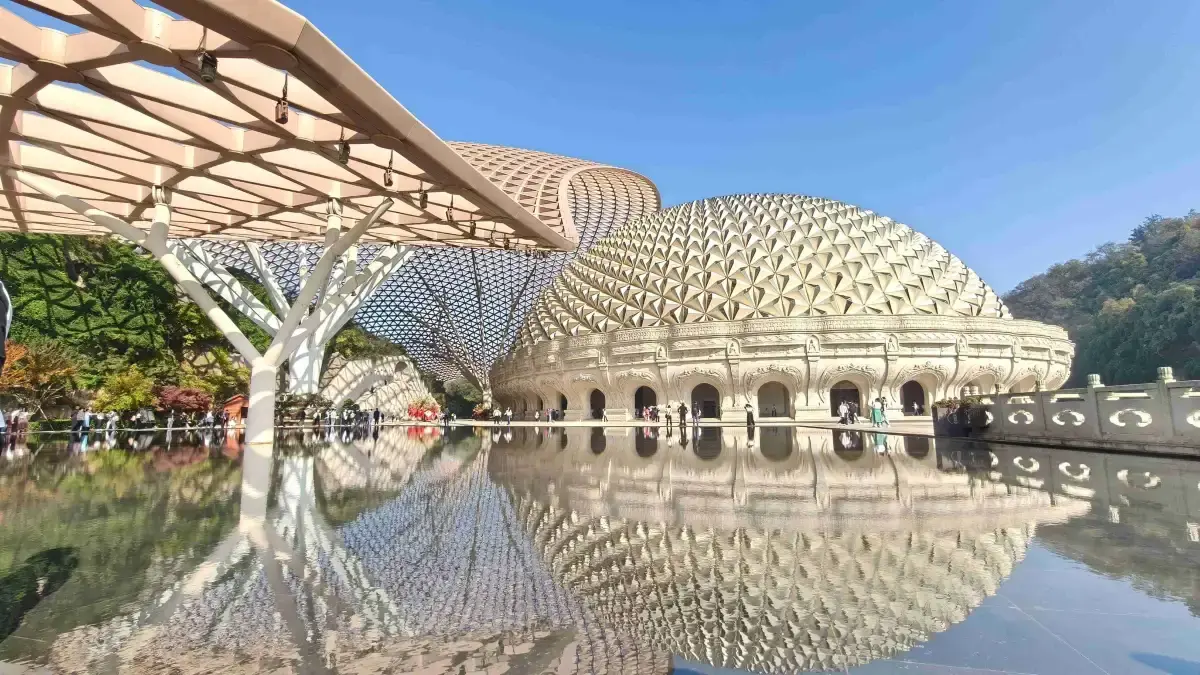
The Buddha's Peak Palace: large dome, small dome, and an underground palace of six floors below and three above ground.
The ancient brick pagoda above the twin peaks — dreamt of by a Tang emperor, photographed by everyone since.
The mountain's historic temple, renamed by the last emperor of the Southern Tang and active for over a millennium.
14.87 hectares of new landscape at the eastern entrance, with a stream from Yinlong Lake and 26 kinds of peach blossoms.
The tomb and memorial of the great Ming navigator — the mountain's link to China's age of exploration.
Ramparts from the Song-dynasty general's Anti-Jin campaign, with wide views over the southern plain.
Niushou Mountain in numbers
Our promise
This website is an independent, English-language guide for international travelers planning a visit to Niushou Mountain Cultural Tourism Zone. We are not the official attraction: our job is to translate the mountain's vast practical and historical information into one clear, current and honest resource — what a ticket actually includes, how the shuttle system works, when the peach blossoms bloom, and what real travelers wish they had known before arriving.
Every guide blends first-hand travel reporting with the attraction's official announcements and hundreds of verified Trip.com traveler reviews, and each fact is re-checked before publishing. When details can change — relic-worship dates, seasonal closures, maintenance works — we say so plainly and point you to the official hotline rather than guessing. That honesty is the whole point: a mountain this size rewards good planning.
 English English
 Chinese (China)
 Chinese (Hong Kong)
 Chinese (Taiwan)
 Russian
 Korean
 Japanese
 Thai